Handbooks
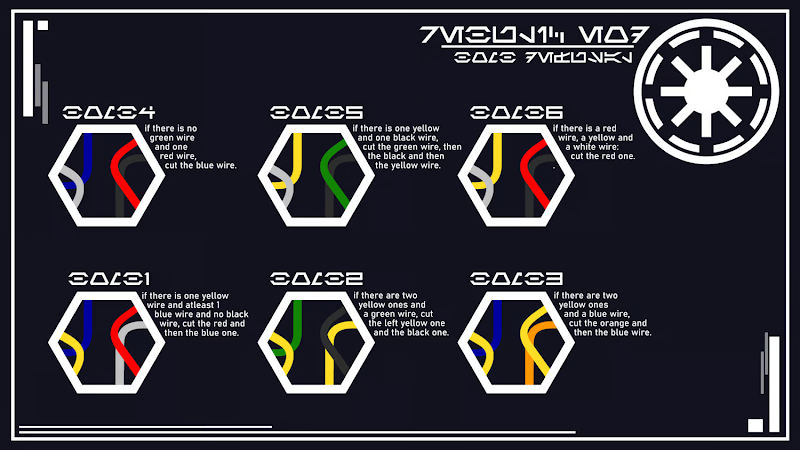
First off, we'll discuss the kinds of explosives that you will need to know. Different kinds of explosives are called CBRNE. CBRNE stands for Chemical, Biological, Radiological, Nuclear, and Explosive bombs.
Chemical:
-
A chemical weapon is a specialized munition that uses chemicals formulated to inflict death or harm.
Biological:
-
A harmful biological agent (such as a pathogenic microorganism or a neurotoxin) used as a weapon to cause death or disease usually on a large scale.
Radiological:
-
A dirty bomb or radiological dispersal device is a speculative radiological weapon that combines radioactive material with conventional explosives.
Nuclear:
-
A nuclear weapon is an explosive device that derives its destructive force from nuclear reactions, either fission or from a combination of fission and fusion reactions.
Explosive:
-
A reactive substance that contains a great amount of potential energy that can produce an explosion if released suddenly, usually accompanied by the production of light, heat, sound, and pressure.
These explosives will most likely be defused the same way. The only thing that might differ is for the chemical and biological bombs you’ll have to deal with canister disposal.
Vital Notable Bomb Components
Container:
-
This is the framing of a bomb, the outer shell.
-
Sometimes the framing will make it convenient to access the interior of the bomb (panel), sometimes it will NOT.
Payload:
-
This gives a bomb explosive potential.
-
Bombs that are chemical or biological might be restricted to specifically a chemical or biological release, but could put out an explosive release.
Wiring:
-
This connects all the bomb’s vital “organs” together allowing it to function.
Igniter (Initiator and Switch, technically):
-
This is what triggers the payload/detonation process.
-
Examples include pressure plates, timer activation, remote activation, dead man’s switch, etc.
Specific Bomb Components
Power source:
-
These are usually within stationary bombs, set for detonation. Sometimes, projectile bombs will use these also.
-
More often than not, however, projectile bombs will explode on the force of impact and not require a power source (example: a bomb that’s landed but hasn’t detonated).
-
Arming a bomb does not necessarily mean it has been electronically primed to explode. Sometimes, it might just mean it has the capability of exploding (like unsafetying a weapon).
Enhancements:
-
Bombs may be surrounded by or packed with additional materials or “enhancements” which make the bomb’s detonation more deadly.
-
These can include nails, glass, or metal fragments designed to increase the amount of shrapnel propelled by the explosion. Enhancements may also include other elements such as hazardous materials.
Biological/Chemical Canisters:
-
As the name indicates, these are seen in chemical and biological bombs.
-
These canisters are meant to contain deadly substances until a detonation happens in which these deadly substances will be released.
Nuclear Payloads:
-
As the name indicates, these apply to Nuclear bombs.
-
The nuclear payload is typically some kind of radioactive isotope, element, compound, etc.
-
These are usually within the center of the bomb, surrounded by conventional explosives to squeeze and consolidate the payload, making it reach critical mass, creating the devastating effects characteristic of nukes.
-
Players will need special equipment to remove and secure the payload.
Signal detonation IE panels(Timers, det, etc.)
-
Locate panel (no panel, use fusion cutter (if you have the cert) or unscrew the top).
-
Check for fail safes (disable that first if there is one)
-
Remove panel with screwdriver
-
Locate the wire leading to the payload
-
Cut the wire leading to the payload
Key notes
-
Remove the panel, and check for fail safes
-
Follow the wires from the panel to the payload/warhead (front of bomb typically)
Encrypted panel
-
Hook data pad into encrypted explosive.
-
Check the encryption for a fail safe (disable that first if there is one)
-
Run the encryption through Republic decryption software.
-
If the bomb grants you access to the interface of the bomb, shut the bomb’s system down.
Hybrid
-
Hook data pad into encrypted explosive.
-
Check encryption for a fail safe (run Cydia if there’s a fail safe).
-
Run the bomb encryption through Republic decryption software.
-
If the panel pops off then locate and cut the wire leading to the payload.
Volts/AMPS Defusal(Cut the wires in order from most volts/AMPs to least)
-
Locate and disable boobytraps
-
Remove the panel, locate, or create an open that exposes wires.
-
Remove multimeter/ammeter from the tactical pack, and connect it to each wire.
-
Cut the wires in order and dispose of the explosive as seen fit in the EOD protocol section at the bottom.
Defusal Without Tech
This can be used in any situation, but more helpful if you are having tech failures.
Thermal Defusal
Thermal bombs build up the heat from the wires and release that energy in the form of an explosion.
(If a wire is getting hot on a bomb it means the bomb is getting ready to blow, but you’ll still have sometime)
-
Locate and disable boobytraps
-
Remove the panel, locate, or create an open that exposes wires.
-
Remove the gauntlet and feel each wire for the hottest wire, which should also give off the most vibration.
-
Cut the wire and dispose of the explosive as seen fit in the EOD protocol section at the bottom.
Controlled Detonation
For controlled detonation you’ll need to make sure the bomb is out of range from populated life and will have no effect on local life. Place a det on the bomb so there are no fuck ups and trigger it when out of range. You can also blow said bomb up in orbit after placing a beacon on it, so the pilot can blow it from a distance.
Explosive Ordnance Disposal Protocol
In disposing of explosive materials you’ll have to think on your feet. After you defuse a bomb you are supposed to dispose of the entire bomb unless certain factors prevent you from doing so. It all comes down to population, bomb type, objectives/time, etc.
-
If you have time to dispose of the whole bomb or you are dealing with a radiological/dirty bomb call for an EOD evac. You’ll need to find a way for the Pelican or other transport ship to carry the bomb.
-
If you do not have time or are not in contact with command or EOD support you need to remove the payload along with the chemical canister and take it with you.
In the situation that there is a CBRNE bomb you need to seal your suit and command untrained units to evacuate the locals. The best way to do so would have them board LAATs and be sent to the Venator or out of the blast/effect radius. This will be temporary until the bomb is defused or the area has been cleansed of whatever has been released and the location is inhabitable once again.
Approved by: High Command
Introduction
This Handbook will have all the rules & guidelines you as a pilot MUST follow. It is your responsibility to keep up-to-date on this handbook’s updates/changes. Below will be sections that go in detail about what you need to do and such.
Rules & Guidelines
-
Air Traffic Control(ATC) - Must be listened to at ALL times
-
All Pilots are treated equal, no matter their experience
-
Gamemaster’s decide if there is flying or not, you may ask but don’t repeatedly ask.
-
Callsigns are REQUIRED prior to takeoff, the ATC has to know who is in the air at all times(During training you will receive a callsign)
-
SERIOUS FLYING AT ALL TIMES(Unless in Downtime)
Air Traffic Control(ATC)
-
You MUST listen to them at ALL times
-
If you need to take off and don’t get an answer you may take off after a minute of silence, same with landing
-
-
ATC requires you to have a callsign in order to fly, this is assigned during your pilot certification and is battalion specific
-
Set your callsign with the following command
-
“/callsign Charlie 1-2”
-
-
You can also see your current callsign
-
“/currentcallsign”
-
-
-
To use ATC you type the following
- “/atc MESSAGE”
- While in the air its good practice to be connected to the ATC Comms, although not required but the Comms system allows you to be connected to 3 channels, you can switch between Comms with your Key-bind(Default is “ALT+H”
Takeoff & Landing Procedures
-
Before you take off/land you must contact ATC for permission, we don’t want to cause a crash on the ship
-
If you need repairs you must contact ATC with the hangar you want to land in to repair or rearm, this doesn’t require a response from ATC as the hangars are ONLY for repairing and rearming.
Examples
-
Takeoff
-
“/atc Requesting permission for takeoff via Main Hangar(MH)”
-
Landing
-
“/atc Requesting permission to land via Main Hangar(MH)”
-
Repair
-
“/atc Requesting permission to land via Hangar 2(H2) for repairs”
-
Rearm
-
“/atc Requesting permission to land via Hangar 1(H1) for rearm”
Pilot Certification
All troopers are allowed to become Pilot Certified but must be cleared by their commander, the certification topics are below.
-
ATC Understanding
-
Takeoff & Landing
-
Repair & Rearm
-
Callsigns
-
Combat Simulation
Approved by: High Command
Introduction
This Handbook will have all the rules & guidelines you as a engineer or mechanic MUST follow. It is your responsibility to keep up-to-date on this handbook’s updates/changes. Below will be sections that go in detail about what you need to do and such.
Rules & Guidelines
- Must /roll to find out what state the equipment is in(Unless Noted by a Gamemaster)
- Have to follow the Roll Scale, if you roll a 9-2 then you HAVE to fix 4 Parts.
- All Rp has to be played out via /rp(So GMs can see when its complete and or correct)
Roll Scale
| 100 - 98 | Perfect |
| 97 - 80 | Almost Perfect |
| 79 - 60 | Good |
| 59 - 50 | Moderate |
| 49 - 30 | Not Good - 1 Issue |
| 29 - 20 | Bad - 2 Issues |
| 19 - 10 | Very Bad - 3 Issues |
| 9 - 2 | Extremely Bad - 4 Issues |
| 0 - 1 | Destroyed - Cannot Repair |
How to Engineer RP
Engineer RP Is left up to your imagination, comming up with parts is essential to the sucess of it, making up stuff will be apart of the cerficiation, use your imaginiation. When you have issues you must find a part to fix, IE. Console, hydrolics, sensors, guns, or parts to reactors or anything else. You dictate the quality of your rp and its completely uip to you how it goes. You can take as long as you want or as short as you want it, just make it make sense, utilizing tools, gaining acess to pannels, or taking off parts, but it must all come down to fixing something for it to pass.
Approved by: High Command